The distinct, creamy notes of milk meld with the caramel-dominant brew of coffee beans. This dreamy concoction is swished back and forth between a stainless steel tumbler and a stainless steel ramekin-like dish called a davara, making the perfect, aromatic South Indian degree kaapi or coffee. The norai, which is the Tamil word for the tiny perforated bubbles are created in the swishing process and an unmistakable marker of a good cup of South Indian Filter Coffee. The perfect brew makes every bubble hold and one passing thought is enough to have you brewing your own for a few meditative sips.
But not all cups are made the same. What was widely available – be it a restaurant in Tamil Nadu or at my parents home in Chennai became harder to recreate here in the US. After years of experimentation and several bags of varying origins, I have figured the secret to a good South Indian Filter coffee and it has nothing to do with your coffee bean.
What is South Indian Filter Coffee?
Before we begin, here is a quick introduction to this South Indian beverage for those who are new to this style of coffee making.
South Indian Filter Coffee uses a simple filter that is made up of two chambers. The top chamber is perforated at its base. This holds the coffee grounds. The bottom chamber collects the coffee decoction.
You simply pour hot water over the grounds in a swirling motion very slowly. The water then passes through the gently tamped grounds and drips into the bottom chamber. The drip depends on the ratio you use. Traditional brews call for extremely hot water to the point of sputtering but modern brewers prefer milder temperatures keeping it under 205°F. I have found success with both variations.
While a lot of western brewing methods prefer to leave the magical coffee bean alone, Asian philosophies dictate otherwise. A common theme that you will notice among many Asian coffee recipes is the use of a base canvas, mostly milk. The idea behind this is to balance the strong flavors of the bean, making it agreeable for the wider population.
Does the coffee bean matter?
Yes and No. Every coffee enthusiast knows and understands the importance of using good quality coffee beans to make their brew. The minimum baseline expectation is that the brewer knows how to source good coffee beans and brew a good cup of coffee. Working with a bean of inferior quality is blasphemous and a complete waste of money. Not conforming to the basics of coffee brewing can surely butcher even the cup made with the best of beans.
So I’m assuming that coffee enthusiasts are only using good beans and their preferred method of extraction that guarantees them the best results every single time. This makes me think that the problem is not with the coffee or the brewing method itself, but another component altogether.
What coffee beans do you need to make a South Indian Filter Coffee?
There is no one varietal that makes the perfect South Indian Filter Coffee. The highest quality bean wins. It’s that simple.
Traditional families adhere strictly to tried and tested recipes that have been perfected over several generations. They either lean towards a single varietal or a combination of the varietals (arabica, robusta, and peaberry) for their daily brew. To the traditionalists, the roaster matters more than the bean itself. It is a matter of pride and consistency. Some of these coffee roasters are mostly hole-in-the-wall establishments whose walls are caked with grease, a likely result arising from decades of natural oils from the roasted beans combining with coastal humidity.
There is also a sub-category of traditionalists that love adding chicory, a relatively modern addition to South Indian coffee making for a thicker decoction, a highly sought-after variant among the traditional folk.
Purists will swear by an Arabica, a naturally sweet and plump bean. Modern brewers love unique, intentional experiences and take every cup seriously. They dive deeper by understanding more about the origin and estate and take special care in procuring their beans from single-estate or single-origin sources, to appreciate the harvest of that region or estate.
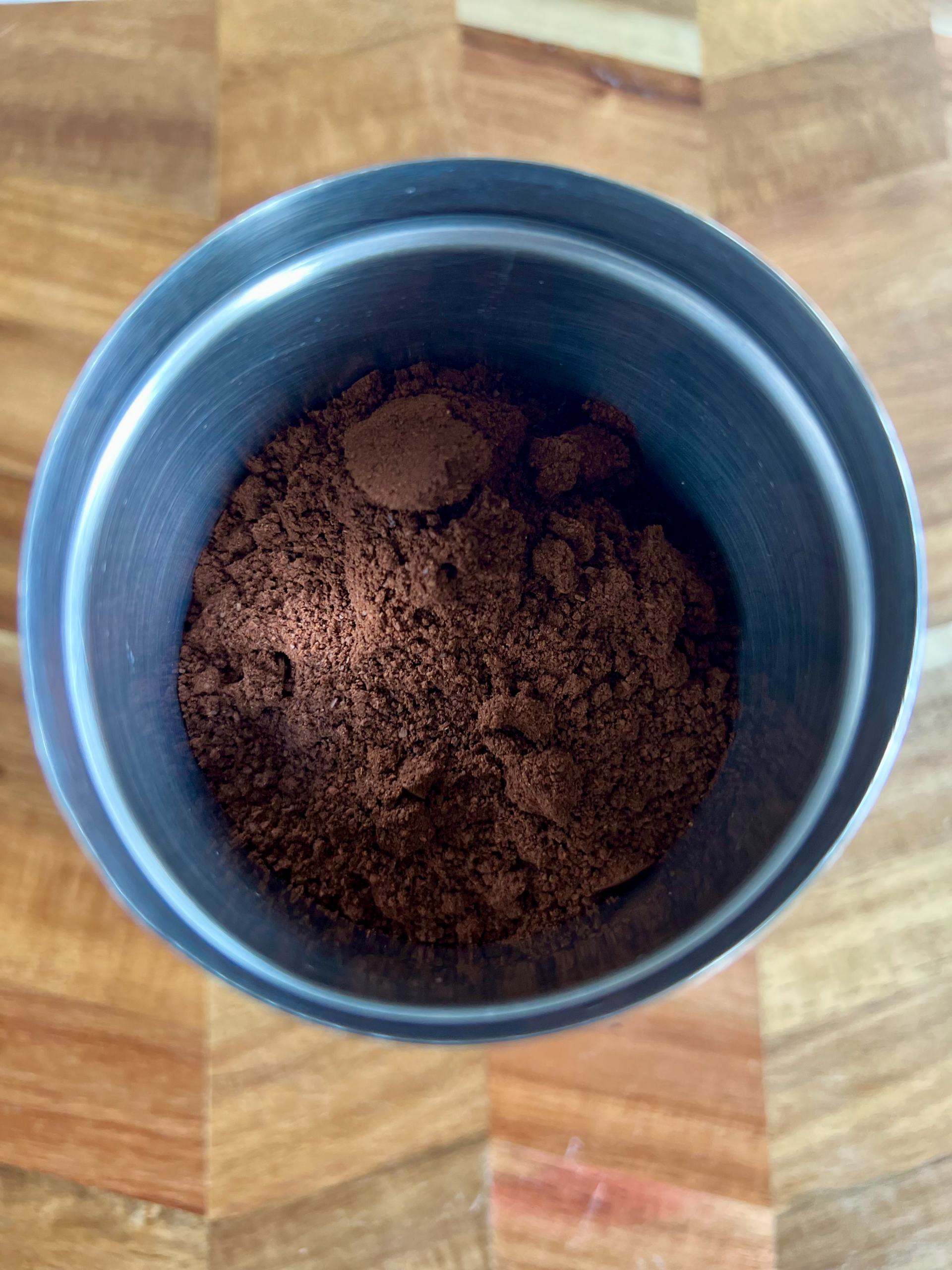
Regardless of the beans you purchase, the quality matters. But grind levels matter just as much. Some families prefer a coarser grind for a faster drip. And some like mine, prefer a moderate to fine grind, almost similar to an espresso. The coarser the grind, the faster the drip. This results in a watery brew which is not good if you’re looking for that lusciously thick coffee decoction. There is also another method that lets you cheat the system with the addition of chicory. Even 10% of it mixed in with your regular coffee should lend a thicker brew.
So what’s the secret to a good South Indian Filter Kaapi?

When I first moved to the US, I nearly died from the lack of good filter coffee. My husband was drinking Starbucks at the time. While I owe him for introducing me to other styles of coffee making (check out my post on brewing with a moka pot), I also missed a traditional cup of degree coffee and almost hugged the coffee aisle at my local Indian store when I saw the word Leo on it. What used to be a brand that I respected but not nearly enjoyed became a sight for my coffee-starved eyes.
I picked up a new brand of coffee at every grocery trip. We experimented and played around with brewing methods, brew times, and water temperatures. You name it, we tried it all. Some days were good and some days were bad. The days we ended up with a bad-tasting drink, we blamed it on the method or brand of coffee. Long story short, we were not as successful in consistently recreating the South Indian Filter Coffee like we remembered it from our days in India.
On one of those trips back home, my mother recommended a hole-in-the-wall establishment in Chennai that sold pure coffee, claiming it was unlike anything she had ever tried. I did not get the hype until I had that first sip. I was blown away but skeptical at the same time over the bold claims she made of the coffee having no added chicory.
So I made a trip to the roastery to see their process for myself. What I saw was this incredible couple running their humble little establishment in a basement store in Alwarpet, Chennai called Sarasu Coffee Works. I saw their process and kept looking into their grinder, asking them if they were planning to add chicory at some point.
The owner uncle understood my enthusiasm and let me watch his process, explaining where he procured his beans and how much he roasted on the daily. I stood next to him with my eyes peeled just in case I missed him sneaking in a spoon of chicory with my beans. But of course, this did not happen. I took home bags of the most aromatic coffee, still amazed at the quality of the coffee itself.
My life has changed a lot since I came to America. I am now a mom of a 9-year-old and have the habit of drinking my first cup of coffee after I’m done packing my daughter’s lunch every morning. The milk, on some days, is set on low while I prepare her lunch, simmering longer than it needs to. That’s when I started noticing a difference in the taste between coffees made on days the milk boiled longer versus days it had not.
The days the milk boiled longer, my coffee tasted incredible. Yes, the beans matter but for that absolutely rich kumbakonam degree kaapi taste that is quintessential to an unforgettable South Indian Filter Coffee, you need what we call a sunda kaachina paal. This milk is boiled slightly longer than regular milk and tastes thicker, has a more viscous texture, and borders somewhere near but not quite, an evaporated milk.
Be careful not to overcook the milk as it can completely overpower the feel and flavor of the coffee, leaving you one smidge away from a thick, chalky disaster. The milk with the right viscosity lets your norai hold, trapping in the naturally sweet flavor of your coffee in every little bubble. With milk that is boiled once, the bubbles dissipate almost instantly after the swishing. Ultimately the magic to a perfect South Indian Filter Coffee lies in that norai and this is created by boiling the milk to the right texture.
How to boil the milk for the perfect South Indian Filter Coffee
Like I mentioned, the viscosity of the milk matters in creating the perfect cup of South Indian Filter Coffee with an instagrammable norai. The trick is to bring a pot of milk to a full boil and when it starts to almost boil over, you simmer for at least 20 to 30 minutes on the lowest heat possible. The material of the pot and the quantity does not matter either as long as you bring the milk to a full boil and a simmer of 20 to 30 minutes gives it the best body. This gets you the milk to make the perfect kaapi.
So why did my coffee taste different in India vs USA?
The simple reason is that stoves in India heat up liquids significantly faster and are more aggressive than the ones in California. The ambient temperature in Chennai is sizzling to the point of being unbearably hot. The scorching temperatures not only help boil your milk faster, but keep the liquid hotter long after the heat has been turned off. What you get as a result is an almost sunda kaachina paal, with or without a long simmer.
Additionally, Indian moms spend several minutes prepping food, whether it is grinding chutneys or steaming idlis, before they get a moment to prepare your coffee. That little wait causes the milk to simmer a little longer, making it ideal for creating restaurant-style degree kaapis in your home.
In contrast, this process is longer to accomplish here in California. The ambient temperature here in the SF Bay Area is much cooler and lowers the temperature of the milk within a minute of turning off the heat. To achieve a similar taste and texture, you will need several boils and a longer simmer to achieve the same effect.
It now makes sense why my parents hover near the stove when they visit us or ask for extra strong and extra hot beverages at coffee shops. Coffee shops predominantly make Italian-style coffee recipes that heat your milk in a flash using the steam wand for a silkier microfoam that is perfect for creating latte art. This is completely different from the South Indian norai, a visibly perforated microfoam with pronounced bubbles to trap the flavors of both coffee and milk by cooking the milk to a specific consistency.
While both are excellent in their own way, the former leans closer to the taste of fresh, hot milk and the latter on the caramelized notes of cooked milk, which is much harder to replicate with a steam wand. This is what I believe makes a great cup of South Indian Filter Coffee and sets it apart from the average cups you have had.