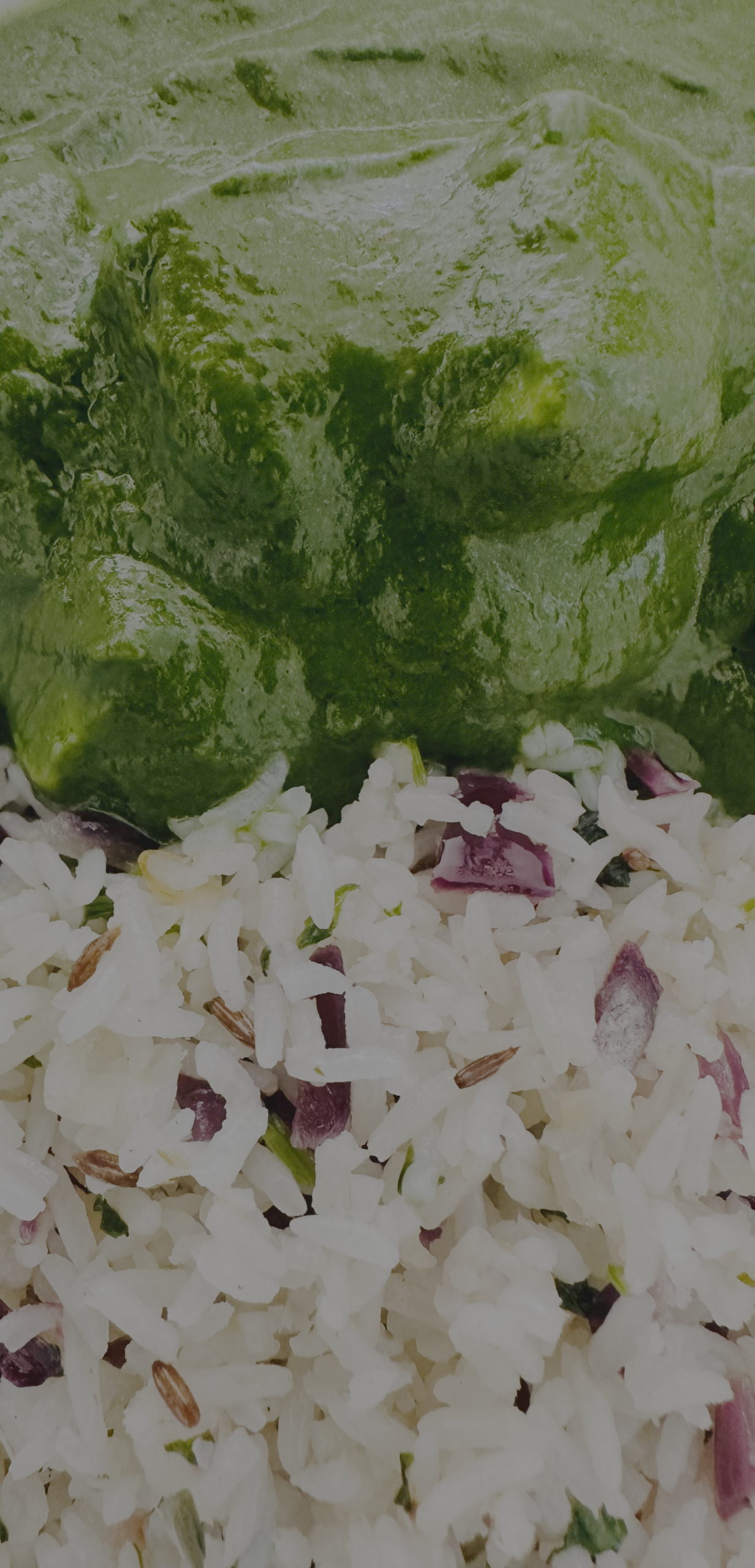
I’m not a food historian or from the North Western part of India. But I am a food enthusiast and I love dissecting food and analysing the whys, the hows, and the why nots of cooking. Home cooked or restaurant-style, it doesn’t matter. Today I dissect a recipe that is easily in my top 5 foods I couldn’t live without – Palak Paneer. Why? Because this is one recipe that you can follow to the T every single time and have it taste completely different from the last one you made. Here’s a fun little dive in to why Palak Paneer tastes different every time.
Palak Paneer Through the Ages
My fondest memory of Palak Paneer is from a Punjabi dhaba called “Sachin Ka Dhaba” in Adyar, Chennai. This hole-in-the-wall place was our monthly guilty pleasure. We ordered out once a month. Eating out frequently was just not a thing back in the day.
Sachin Ka Dhaba’s palak paneer practically bathed in ghee or was it cream that had cooked down to the point of splitting?! Who knows? I’m not sure I’m presenting a very appetizing picture here, but this was my childhood favorite. Silky spinach, a good level of greasy, and creamy paneer.
Fast forward to life as an adult, I have tried many versions, excluding chunky palak paneer because what is that even?! I know there are people out there screaming, “its rustic”. Sure. If. that. is. how. you. perceive. the. variation.
I digress but I have tried several variations and something that always struck me as odd about the dish is how I could never get the recipe to taste the same every single time. This is not true for other recipes. Just Palak Paneer. I have tried recipes with tomatoes, recipes without, recipes with fennel seeds, without garlic. I even once tried Priya Krishna’s Saag Feta (now that I lurvvv, even though it’s technically not Palak Paneer).

But believe me when I say I have tried a handful of them. And somehow not one of these recipes can ever taste the same. This obviously bothers my inquisitive mind and in true Pakoda Stories fashion, I decided to do a deep dive to understand why Palak Paneer tastes different every time.
Let’s break down and analyse the infamous Palak Paneer.
A good Palak Paneer recipe always starts off with spinach and ends in paneer. There are many variations and styles to make Palak Paneer. I like a smooth, creamy version, with a simple lace of ghee and a touch of cream (not too much). And then there are chunky versions, which if you like, you like and I’m not going to judge you. Here are the components of a good Palak Paneer recipe, regardless of its consistency.
- Spinach
- Blanching Process
- Tadka
- Cream
- Paneer
Spinach
Palak paneer is incomplete without this ingredient. The entire recipe is set around this ingredient. So, does the variety of Spinach matter? The palak I get here in California is the baby spinach. The palak that Indian stores here sell is the savoy spinach, a slightly curly, denser leaf, the closest alternative to the ones in India. And the palak we got in Chennai was infamously titled Delhi Palak. If anyone knows the English equivalent, please leave the name in the comments.
But it does not matter what varietal of Spinach you use because there is this thing called oxalic acid in spinach, which is that thing that makes your mouth feel dry and chalky after eating some palak paneer recipes. And the amount of oxalic acid varies between bunches. This element alone is enough to tip the scales ever so slightly every time.
Blanching Process
This is a process that has a loose definition in Indian kitchens. True blanching requires you to bathe the spinach in hot water until they wilt and immediately shock them in ice cold water to stop the cooking process. This helps retain the true green color that we love in Palak paneer. While this is a foolproof method to retain the color, indian aunties (happily becoming one myself) and sustainability cooks will skimp on the water and cook down the greens in a pan with little water. The greens are then blended when cooled. Even with full on blanching, you are not guaranteed the same taste since the spinach itself tastes different from one bunch to another. So, this process of cooking the spinach and the temperature at which you blend the spinach greatly affects the final taste and texture.
Tadka
No Indian dish is complete without a tadka. The aromatics of a tadka when combined with hot oil amplify the senses and make or break your dish. And specifically in the case of Palak Paneer, a tadka made with oil cannot justify or bring out the savory, creamy flavors of the dish. This is one dish where a tadka made with ghee truly shines and makes all the difference.
To Cream or Not to Cream
A hot controversy that surrounds Palak Paneer. Some “purists” will tell you adding cream is a big NO. And other “purists” will tell you that the dish is incomplete without cream. I love cream and believe this is a stabilizer ingredient. Even if other ingredients are harder to control, cream is the one ingredient that can round up a Palak Paneer recipe, giving it the consistency you want every single time.
Paneer
Indians in India will never understand the pain of hard, chewy paneer. Indians who live abroad have not tasted good paneer in so long. Yes, we can make very soft paneer at home. But it is still not the same as the ones we get in India and we are very jealous of you folks! Nothing more. I rest my case.
It was never YOU. It was always the INGREDIENTS
So, my dear food enthusiasts and fellow cooks, if you have always wondered why you were never able to recreate your favorite Palak paneer recipe at home exactly as you remember it tasting at your favorite restaurant or how you have envisioned it in your mind, I’m here to reassure you. It was never you that lacked the consistency, rather the complexity of the ingredients that complicate an otherwise very simple dish every single time. Also, here is my recipe for a dreamy, creamy Palak Paneer which I pair with ghee rice, another personal favorite.
Print
Palak Paneer Recipe
A silky spinach recipe from India with creamy paneer for the perfect savory accompaniment to your rice or roti!
- Total Time: 20 minutes
- Yield: 2 servings
Ingredients
1 medium Onion, chopped
1-2 small bunches of Savoy Spinach
3 thai green chilies
1 tbsp cumin seeds
2 tbsp oil
1 tbsp ghee
Asafetida, a pinch – Optional
Cream – Optional
Instructions
- Heat a pan over medium-high heat.
- Add a tbsp of oil and wait for 2-3 minutes until it is hot.
- Add cumin seeds and let them sputter and become fragrant
- Add chopped onions, ginger garlic paste and cook until onions are browned.
- Transfer to a plate and set this aside to cool.
- In the same pan, add spinach, green chilies, and a few splashes of water
- Let the spinach wilt. Turn off the heat and allow the mixture to cool. (Read notes for blanching method)
- Blend the onion mixture and spinach into a smooth puree.
- To the same pan, add a tbsp of ghee and the spinach puree. Cook for 1 minute.
- Add cubed paneer. Cook for 2 additional minutes.
- In a tadka pan, add a tbsp of ghee. Add sliced garlic when the ghee is hot and saute until the garlic is starting to brown. At this point, add a tbsp of red chili powder. As soon as the chili powder starts to bloom, turn off heat and pour this ghee-garlic mixture over the gravy of palak paneer.
- Adjust salt. Serve hot with jeera/ghee rice or chapati.
Notes
- Shape of the paneer doesn’t matter. Cut it to your desired shape.
- For a traditional blanch, wilt the spinach in a stock pot of boiling water on medium heat. Transfer the leaves immediately to an ice cold bowl of water to stop the cooking process. Proceed to blend the spinach with the cooled onion mixture as per the recipe.
- Prep Time: 5 minutes
- Cook Time: 15 minutes
- Category: Dinner, Lunch, Main Course
- Method: Sautéing
- Cuisine: Indian
- Diet: Vegetarian